Choosing a managed investment platform is a process of matching a service to your circumstances—not picking the lowest headline fee or the most polished app. This guide is general information, not personal financial, tax or legal advice. Investments can fall as well as rise in value, and you may get back less than you invest.
What a managed investment platform should help you compare
AI-generated generic editorial illustration — not a retailer product photo and does not depict the reviewed product or service. Give readers a neutral visual framework before they begin comparing managed investment platforms.
 A managed investment platform typically takes responsibility for building and maintaining an investment portfolio within a chosen investment approach. That can reduce the practical work of selecting and maintaining investments, but it does not remove investment risk or make a platform suitable for everyone.
Start by writing down what you need the service to do. Your comparison should cover your goal, intended investment period, capacity for loss, the account wrapper you may need, total costs, withdrawal needs, provider checks and the level of support you would find useful. The FCA stresses that investment decisions should begin with realistic goals and expectations, rather than an assumption that returns are certain.
A platform’s questionnaire, model portfolio or guidance is not automatically the same as personal financial advice. Treat it as part of the provider’s service process and read the terms carefully. If your situation is complex or a wrong decision could have serious consequences, consider whether you need regulated personal advice.
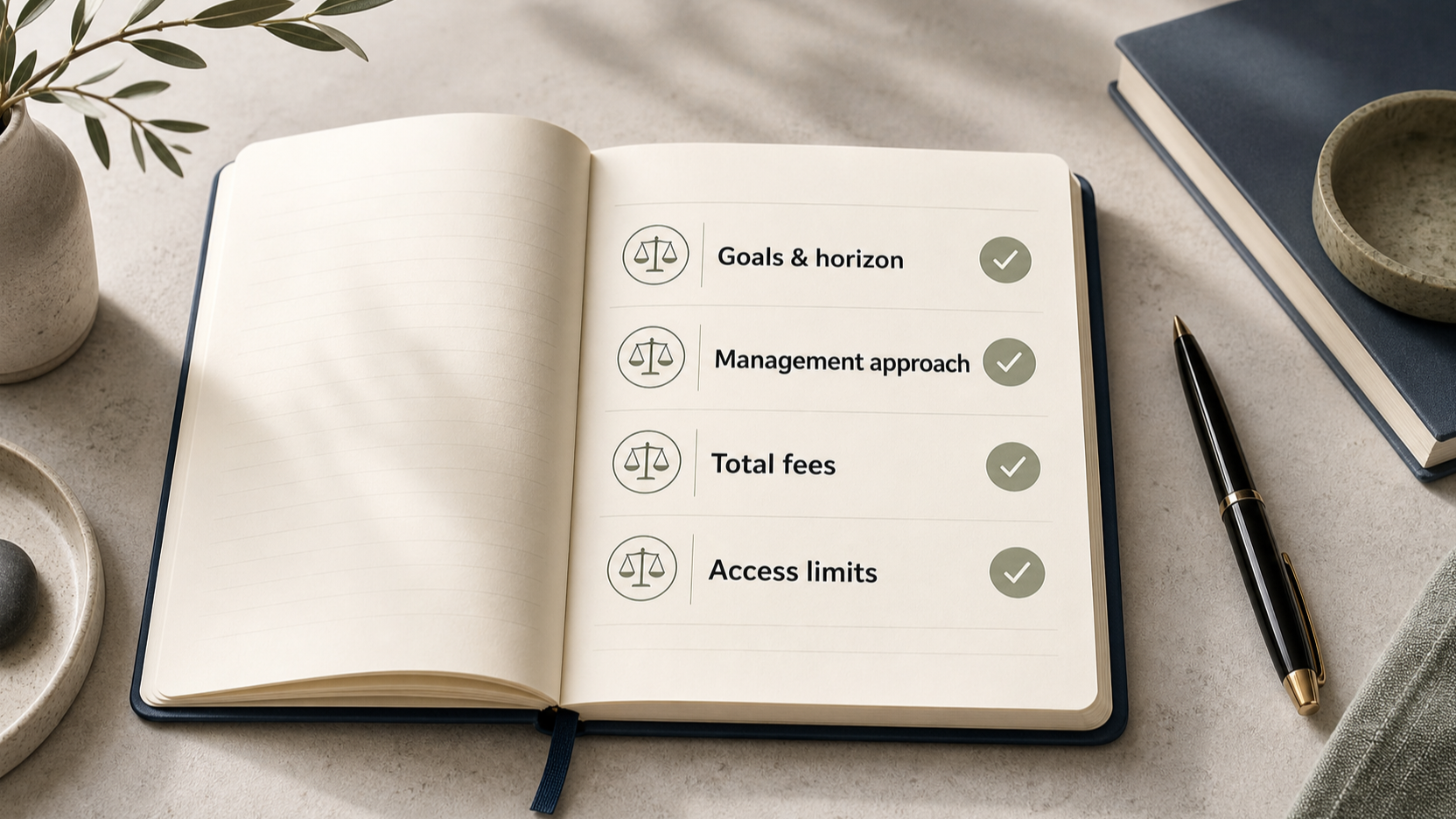
Before comparing brands, make a one-page checklist with four headings: your goal and horizon; how the portfolio is managed; every cost shown in the disclosure; and access or account limits. It gives you a consistent way to compare documented information.
Start with financial readiness, goals and time horizon
Platform selection comes after financial readiness. The FCA says it is sensible to prioritise immediate finances, including short-term debt and an emergency cash fund, before starting to invest. Keeping accessible emergency money can reduce the chance that an unexpected expense forces you to sell investments at an inconvenient time.
Define the purpose of the money in plain language: retirement planning, a long-term house deposit, future education costs or a broader financial goal. Then state when you may need it. Investment outcomes are uncertain, and a shorter horizon generally leaves less time to absorb market movements. The FCA notes that the potential for higher returns comes with higher risk.
Also consider capacity for loss: if the investment fell in value, would that affect your ability to meet essential commitments or force a sale? This is separate from whether you feel comfortable with market volatility. A platform can offer risk-labelled portfolios, but only you can test whether the loss of money would be manageable in your circumstances.
Avoid treating investing as a solution for money needed soon or for an unresolved debt problem. The FCA specifically cautions against using a credit card to buy investments, because interest and charges are likely to outweigh investment returns.
Compare the management approach and support you receive
“Managed” can mean different things in practice. Establish what the provider actually manages: portfolio construction, asset allocation, fund selection, periodic rebalancing, or only a choice among ready-made investment styles. Ask how your selected style affects the investments used and whether you can change it later.
Compare the operational experience as well as the portfolio label. Useful questions include:
- How is the portfolio kept aligned with its intended allocation?
- What information will you receive about performance, market conditions and charges?
- Is support limited to account help, or is financial guidance available?
- Can you contact a person when a document, transfer or withdrawal is unclear?
For example, J.P. Morgan Personal Investing says its service includes regular investor updates, insights and access to free financial guidance, alongside a management service. That is an example of a documented feature set, not a reason to assume that the service or its investment style is right for you.
Give each feature a job. Rebalancing may matter if you do not want to maintain allocations yourself; clear statements may matter if you want to monitor charges; accessible support may matter if you expect to transfer an existing account. Features that do not address a real need should not outweigh costs, risk or account restrictions.
Work out the total cost of investing
AI-generated generic editorial illustration — not a retailer product photo and does not depict the reviewed product or service. Make the total-cost method easier to scan while preserving the need to verify each provider's current disclosure.
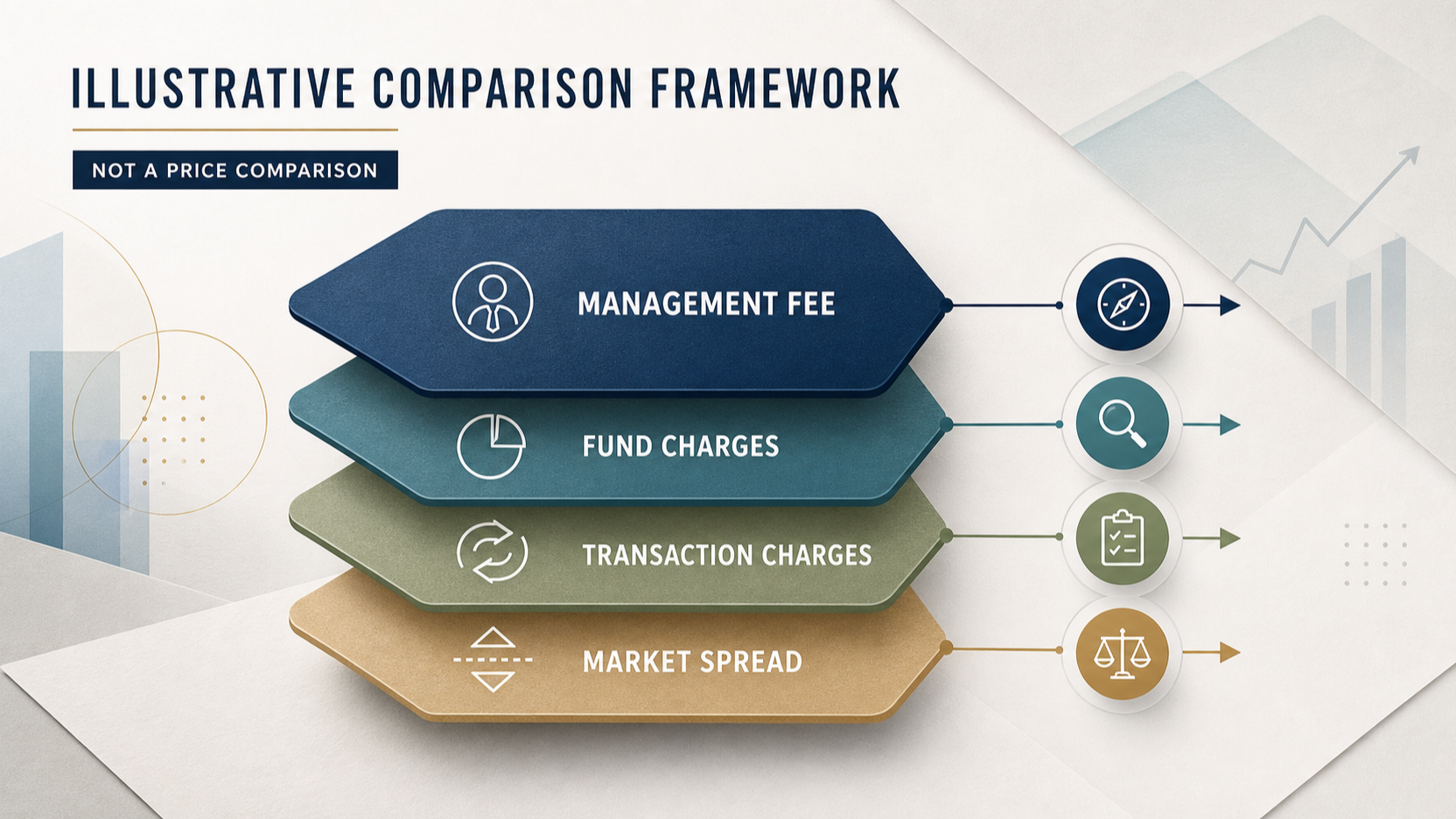 Do not compare platforms using only one percentage on a landing page. Build a total-cost view from each provider’s current disclosure and record the charge, how it is calculated, when it is taken and whether it is reflected in investment performance.
The categories may include a management fee, underlying fund charges, transaction-related charges and market-spread costs. J.P. Morgan Personal Investing describes three separate charges on its accounts: its management fee, investment fund charges and market spread; it also says set-up and transaction costs for buying and selling securities are reflected in portfolio performance. The precise structure and amount will differ between providers and investment styles.
Use the same comparison sheet for every shortlist candidate:
| Cost layer | What to record |
|---|---|
| Management fee | Rate, value band, charging frequency and investment style covered |
| Fund charges | The underlying fund or ETF costs and where they are shown |
| Transaction costs | Any dealing, set-up, transfer or other transaction-related charges disclosed |
| Market spread | Whether the provider explains how this cost arises and how it is presented |
A provider may describe pricing as transparent or simple, but that wording is not a substitute for reading the current fee schedule and terms. Ask for a worked illustration based on your proposed amount and account type if one is available, then keep the date of the document beside your comparison.
Costs reduce the value left invested, so assess them together with service, risk approach and expected holding period. Do not assume that the cheapest-looking option is the best fit, or that a higher charge guarantees a better outcome.
Check risk, account wrappers, access and service limits
Managed investing still exposes you to market risk. A provider may spread investments across funds or rebalance a portfolio, but diversification and professional management do not guarantee gains or prevent losses. Returns are uncertain, and capital is at risk.
Check which account wrappers are available and whether their rules suit your purpose. A Stocks and Shares ISA can be one account option, but it is not automatically the right wrapper for every person. Consider the available account types, current eligibility and tax treatment, and obtain appropriate tax or financial advice where your circumstances require it.
Access matters too. Record the minimum opening amount, minimum regular contribution, withdrawal process, settlement timing, transfer rules and any charges or limits that apply. “You can withdraw” does not necessarily mean the money is available instantly, or that selling investments will preserve the amount you originally invested.
Read the service boundaries before applying. Identify whether the provider offers execution-only access, guidance, discretionary management or regulated advice, and what support is available if your needs change. Check whether you are comfortable with the questionnaire, portfolio choices, communications and any requirement to keep a minimum balance.
Finally, verify the provider’s current regulated status and the specific legal entity you would contract with through official information. Do this immediately before opening an account, rather than relying on an old review, comparison table or search result.
Use a practical shortlist and provider-check process
Turn your requirements into a short, documented process:
- Write your goal, likely investment period, amount, access needs and capacity-for-loss considerations.
- Exclude services that do not offer the account type, minimum contribution level or support model you need.
- For each remaining provider, save the current fee page, terms, account information and risk disclosures.
- Compare total costs using the same headings: management, fund, transaction and market-spread costs.
- Confirm the provider’s regulated status, available account types, minimums, withdrawal terms and support channels directly from current official sources.
- Re-read the application and disclosure documents before committing money; pause if an important point is unclear.
This approach does not produce a universal winner. It creates an audit trail for your own decision and makes it easier to spot where one provider’s documentation is incomplete or where a feature is being mistaken for a benefit.
If fees are hard to compare, ask the provider to explain the charge categories and where they appear in the account. J.P. Morgan Personal Investing says account holders can see a breakdown of fees and charges in their dashboard; other providers may present information differently. Compare the underlying documents, not the presentation style alone.
[Build your managed-platform comparison checklist]
Frequently Asked Questions
Do I need an emergency fund before investing through a managed platform?
The FCA recommends keeping some emergency money with instant access before investing, so unexpected costs do not automatically require you to dip into investments. The appropriate amount depends on your circumstances, but the key question is whether you can meet routine and unexpected expenses without relying on money exposed to market movements.
Is a Stocks and Shares ISA always the right account wrapper for me?
No. It may be an available option, but the appropriate wrapper depends on your circumstances, objectives, eligibility and tax position. Compare the account types a provider actually offers and seek personal tax or financial advice if you need a recommendation.
How do I compare management fees with fund and transaction costs?
Put every disclosed cost into one sheet and note how it is charged or reflected. A management fee is only one layer: underlying fund charges, transaction-related costs and market spread can also affect the value of the portfolio. Use current provider documents and ask for clarification where the presentation is not clear.
Can I withdraw money from a managed investment platform whenever I need it?
Do not assume so. Check the provider’s current withdrawal terms, sale and settlement timing, minimum-balance rules and any charges. Even where a withdrawal is permitted, investment values can be lower when you sell, and the money may not be instantly available.
Sources
Related reading
- Best digital investment platforms in the UK: an evidence-led comparison of fees, accounts and service models
- J.P. Morgan Personal Investing vs Moneyfarm: fees, portfolios, accounts and support compared
- Moneyfarm review: who the platform may suit and where its limits matter
- Managed vs DIY investment platforms: how control, cost and responsibility differ
Editorial information: About our editorial team · Read our editorial policy · Read our affiliate disclosure.