J.P. Morgan Personal Investing and Moneyfarm are best compared as managed digital-investing options, rather than as a contest to find one universal winner. The more suitable starting point depends on whether you want portfolio management, which account wrapper you need, how you assess the full set of charges, and how much flexibility and support matter to you. Investments can fall as well as rise in value, and this is general information rather than personal financial, tax or legal advice.
| Check | J.P. Morgan Personal Investing | Moneyfarm |
|---|---|---|
| Current costs and conditions | Check the official terms | Check the official terms |
| Product scope and intended use | Verify against your needs | Verify against your needs |
| Limitations and service | Compare current details | Compare current details |
Verdict: Which platform fits which investor?
Both services can be relevant if you want to delegate day-to-day portfolio selection and monitoring rather than build and rebalance a portfolio yourself. Moneyfarm documents a Managed Stocks and Shares ISA in which investment experts manage and monitor investments. J.P. Morgan Personal Investing says its offering is designed for long-term investors, while allowing withdrawals and stating that there is no minimum investment period.
A reader who is focused on a managed Stocks and Shares ISA should examine Moneyfarm’s current ISA and pricing information. A reader who values J.P. Morgan’s stated flexibility around withdrawals and its published three-year suggested timeframe may want to examine those terms closely. Neither point establishes that either service is right for every goal or investor.
The practical comparison should start with the account you need, the amount you can invest, your time horizon and risk tolerance, and the complete charge categories. Read the latest official product documents before opening or transferring an account.
What J.P. Morgan Personal Investing and Moneyfarm are
Digital wealth managers, often called robo-advisers, sit between traditional financial advice and fully DIY investing. An independent overview describes the category as an online, automated route that can use information about a customer’s goals, risk appetite, intended investment amount and timeframe to allocate a portfolio with an appropriate risk level. That is a useful category description, not a promise that any particular platform will deliver a particular outcome.
The important distinction is the amount of decision-making you delegate. With DIY investing, you normally choose investments and take responsibility for monitoring and rebalancing them. With a managed service, the provider’s process takes on more of that portfolio work. You still need to decide whether the account type, risk level, costs and investment timeframe fit your circumstances.
Moneyfarm’s supplied official material describes a Managed Stocks and Shares ISA and says its experts manage and monitor investments. J.P. Morgan Personal Investing’s supplied FAQ material addresses topics including ISAs, pensions, Lifetime ISAs and Junior ISAs, as well as minimum investment, withdrawals and fees. Those published topics are starting points for research, not evidence that every account or feature will suit every reader.
Managed portfolios and investment approach compared
A managed portfolio can reduce the operational burden of choosing individual investments and maintaining the allocation yourself. The independent category overview says digital wealth managers commonly use an online questionnaire to establish risk attitude, investment target, amount and timeframe, then allocate customers to portfolios with different levels of risk and potential return. The precise process, available portfolios and current terms should be checked directly with each provider.
Moneyfarm’s ISA page presents its managed Stocks and Shares ISA as an arrangement in which investment experts manage and monitor investments. That describes a delegation model: the customer is not expected to perform the ongoing portfolio-management work alone. It does not remove investment risk, create a guaranteed return or make the ISA appropriate for a short-term need.
J.P. Morgan Personal Investing’s FAQ says a customer could replicate its portfolios independently, but notes that rebalancing and monitoring can involve time, hassle and trading charges. This is the key practical trade-off. Managed investing may be attractive if you prefer a portfolio-management service, while DIY investing may appeal if you want greater direct control and are prepared to make and maintain the investment decisions.
In either case, a risk questionnaire or managed allocation is not personalised financial advice. Your own objectives, capacity for losses, tax position and account rules can still matter materially.
Potential strengths for hands-off investors
For a hands-off investor, the clearest potential strength is delegation. Moneyfarm’s documented managed ISA proposition centres on experts managing and monitoring investments, which may be relevant to someone who does not want to select and rebalance investments alone.
J.P. Morgan Personal Investing documents a different set of practical points worth weighing. It says customers can withdraw whenever they like, that there is no minimum investment period, and that it does not charge a platform withdrawal fee. It also says its offering is designed for long-term investors and gives three years as the minimum suggested timeframe to consider. These are access and product-context facts, not a recommendation to withdraw or invest for any particular period.
The account wrapper can be just as important as the portfolio workflow. Moneyfarm explicitly markets a Managed Stocks and Shares ISA, while J.P. Morgan’s FAQ covers ISA-related questions and several other wrapper topics. Before relying on a strength, verify the current eligibility, transfer process, minimum funding, withdrawal rules and available investment style for the exact product you plan to use.
Limitations, risks and points to check
Managed investing does not make investing risk-free. J.P. Morgan’s fee page explicitly states that capital is at risk. A managed portfolio can monitor and rebalance investments, but values can still fall, and a long-term framing does not guarantee growth. Consider whether your planned use of the money, comfort with fluctuations and ability to leave it invested match the relevant product’s terms.
Costs also need more attention than a single headline number. J.P. Morgan says customers see three separate charge categories: its management fee, investment fund charges and market spread. Its FAQ adds that trading and set-up costs for buying and selling stocks or bonds can be reflected in investments and portfolio performance. Moneyfarm says it uses simple, transparent pricing and directs customers to its pricing information; check that current page rather than assuming a rate from another product or time.
Access can have tax-wrapper consequences. J.P. Morgan says there is no minimum investment period and that customers can withdraw whenever they like, but its FAQ also says that withdrawing from an ISA leaves that withdrawn part of the annual allowance used. It separately flags withdrawal restrictions for Junior ISAs, Lifetime ISAs and Personal Pensions. Check the current official rules before acting, especially if a withdrawal, transfer or account wrapper is central to your decision.
Fees and total investment costs
A fair cost comparison is about the all-in structure, not simply whichever management fee appears lower. Start by identifying the management or service charge, then list any fund-level costs, transaction-related costs and market-spread effects. Ask whether each figure is charged directly, deducted from the account, or reflected in investment performance, and whether it changes with portfolio size or investment style.
J.P. Morgan’s official fee page gives a useful framework. It says customers pay a management fee that depends on the pot’s value and investment style, alongside investment fund charges and market spread. The page says fund charges include set-up and transaction charges for buying and selling stocks or bonds that are paid from investments and reflected in portfolio performance. It also says management fees are taken automatically from the account and that a breakdown is available in the dashboard.
Moneyfarm’s supplied pricing page emphasises transparent pricing and says there are no hidden fees. That is a disclosure principle, not a complete numerical comparison in the material supplied here. Use its current pricing page to identify the applicable costs for the specific account and investment amount you are considering.
For both providers, compare like with like: the same account wrapper, a similar investment amount, a similar risk profile and the same intended holding period. Then check the latest official fee documents before making a decision.
Accounts, minimums and access
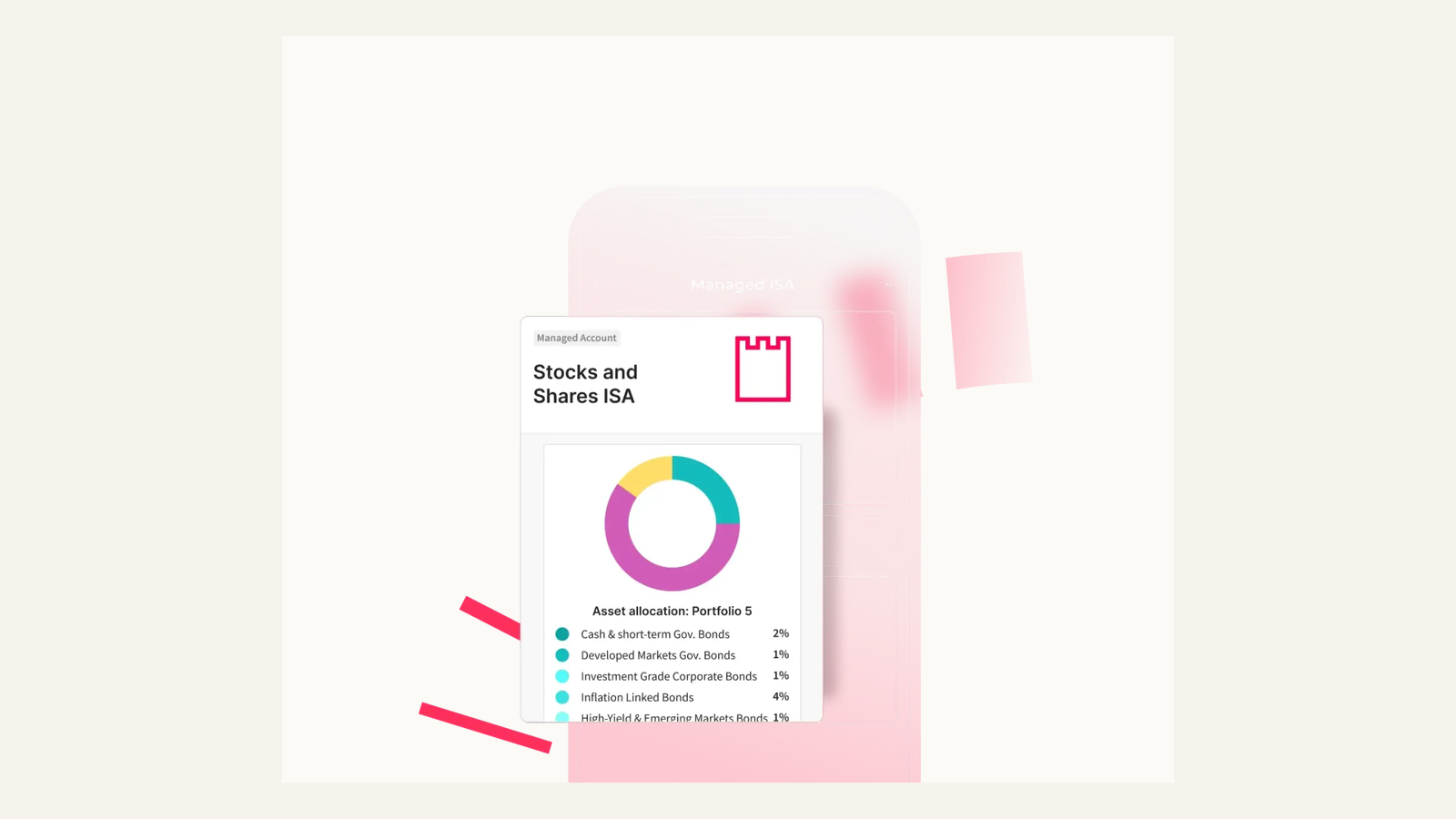 Account choice can change the comparison more than a general platform label does. Moneyfarm’s official ISA page specifically describes a Managed Stocks and Shares ISA. J.P. Morgan Personal Investing’s FAQ contains sections and questions covering ISAs, pensions, Lifetime ISAs and Junior ISAs. This tells you which wrapper questions to investigate; it does not establish that every wrapper is available, appropriate or unrestricted for every customer.
J.P. Morgan says there is no minimum investment period and that customers can withdraw whenever they like. The same FAQ says the minimum suggested timeframe to consider is three years, because its investment offering is designed for long-term investors. Treat those statements together: access may be flexible, but the provider’s own context is not one of short-term certainty.
Before opening or transferring an account, confirm the current minimum investment, eligibility, transfer procedure, withdrawal rules, account-specific restrictions and whether contributions or withdrawals affect your ISA allowance. If you are comparing an ISA with a pension, Lifetime ISA or Junior ISA, the product rules and your circumstances may outweigh a general preference for either platform.
Alternatives to consider
Neither managed platform is automatically the best route. DIY investing may suit someone who wants direct control of investment selection and is willing to spend time monitoring and rebalancing a portfolio. The independent overview notes that DIY investing and using a financial adviser are the traditional alternatives, with digital wealth management occupying a middle ground.
Regulated financial advice may be worth exploring if your circumstances are complex or you need recommendations tailored to your objectives and situation. A managed digital-investing service can help with portfolio implementation, but that is different from personalised advice.
Another digital wealth manager may be worth comparing if it offers an account wrapper, cost structure, minimum funding level or support boundary that better matches your needs. Avoid choosing on a generic ranking alone: compare current official documents, the amount of control you want, the time you can commit, the total costs and the risks you can accept.
How to make the final choice
AI-generated generic editorial illustration — not a retailer product photo and does not depict the reviewed product or service. Support a repeatable, non-endorsement-based final selection process.
 Use a repeatable checklist before choosing, opening or transferring an account:
- Confirm the account type you need and the current eligibility and transfer rules.
- Decide whether the money is genuinely for a long-term investment timeframe.
- Check that the proposed risk level is one you understand and can tolerate.
- Confirm the minimum funding and ongoing contribution requirements.
- Compare all-in costs, including management, fund, transaction and spread-related elements where applicable.
- Check withdrawal access, wrapper restrictions and possible ISA-allowance consequences.
- Decide whether managed portfolio oversight is enough, or whether you need personalised regulated advice.
Then read the latest official product and pricing documents from both providers. J.P. Morgan says capital is at risk and identifies management, fund and market-spread cost categories; Moneyfarm says its pricing is transparent and should be checked on its pricing information. Investing can fall as well as rise, and personal advice may be appropriate where your circumstances require it.
Frequently Asked Questions
Is J.P. Morgan Personal Investing or Moneyfarm a financial adviser?
Managed digital investing is not the same as personalised financial advice. The independent overview describes robo-advisers as a middle ground between paying for advice and DIY investing, using online information about goals, risk appetite and timeframe to help allocate a portfolio. If you need advice tailored to your individual circumstances, consider whether regulated financial advice is appropriate.
Can I withdraw money from a J.P. Morgan Personal Investing account whenever I want?
J.P. Morgan’s FAQ says customers can withdraw whenever they like and that there is no minimum investment period. It also says its offering is designed for long-term investors, suggests considering a minimum three-year timeframe, and notes that some wrappers have withdrawal restrictions. Its FAQ further says an ISA withdrawal leaves that part of the annual allowance used. Check current terms for the exact account before acting.
What costs should I check beyond a management fee?
J.P. Morgan identifies investment fund charges and market spread in addition to its management fee, and says trading-related costs can be reflected in investments and performance. Moneyfarm says it provides transparent pricing. In both cases, check the current official pricing materials for the exact product, investment amount and investment style rather than relying on a headline fee alone.
Is a managed Stocks and Shares ISA suitable for short-term goals?
A managed Stocks and Shares ISA still involves investment risk, so it should not be treated as a short-term certainty. J.P. Morgan says its offering is designed for long-term investors and suggests considering at least three years. Moneyfarm’s ISA page describes expert management and monitoring, but does not remove the possibility that investment values may fall. Consider the timeframe and risk of your particular goal before deciding.
Sources
Related reading
- Best digital investment platforms in the UK: an evidence-led comparison of fees, accounts and service models
- J.P. Morgan Personal Investing review: strengths, limits, fees and alternatives
- Moneyfarm review: who the platform may suit and where its limits matter
- How to choose a managed investment platform: fees, risk, account wrappers and support
Editorial information: About our editorial team · Read our editorial policy · Read our affiliate disclosure.